In the ever-growing digital era, companies are increasingly relying on technology to increase operational efficiency. One technological innovation that has had a significant impact is edge computing. Edge computing allows data processing to occur closer to the source, instead of relying on centralized data centers as in cloud computing. With this approach, edge computing offers a number of advantages that can increase a company's operational efficiency.
What is Edge Computing?
Edge computing is a computing architecture that allows data processing to occur at the "edge" of a network, that is, at a location closer to the device or sensor that produces the data. In contrast to cloud computing which sends data to a data center or remote server for processing, edge computing processes data locally. This reduces the time required to send data back and forth, thereby speeding up response times.
Reduced Latency for Faster Response
One of the main benefits of edge computing is its ability to reduce latency. In industries such as manufacturing, transportation and healthcare, where fast and accurate decisions are critical, every millisecond can impact the final outcome. Edge computing allows data to be processed directly on the device or nearby, eliminating the delays that often occur when data is sent to a central server for processing.
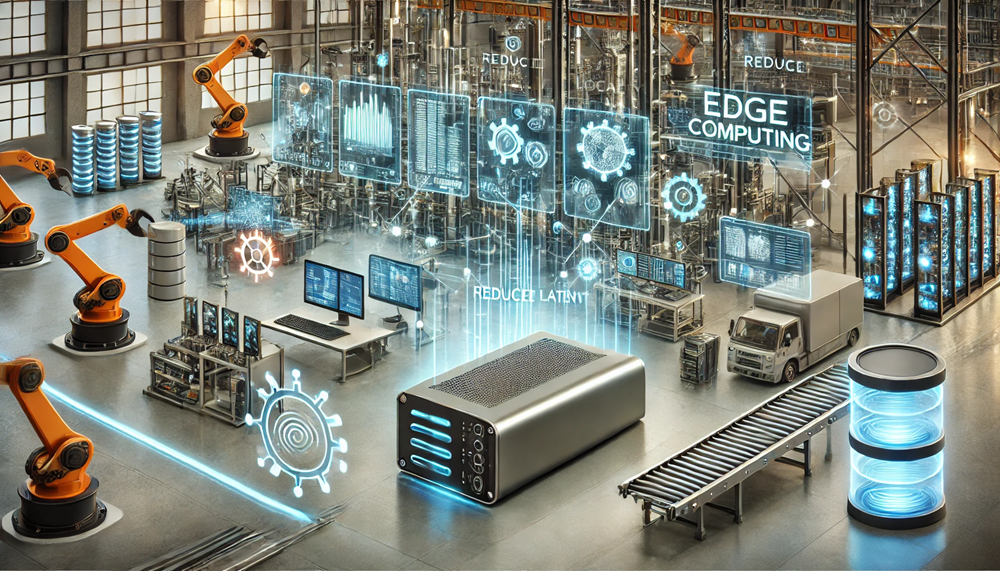
For example, in a smart factory, sensors installed on machines can monitor performance and detect potential problems in real-time. With edge computing, these sensors can directly analyze data and send alerts or take automatic action to prevent machine failure, without waiting for processing on a central server.
Reduced Network Load
Sending large amounts of data to remote data centers requires large amounts of bandwidth and can be expensive, especially for companies that handle large amounts of data continuously. Edge computing helps reduce the load on the network by processing data locally and sending only critical data to the data center or cloud. This allows companies to optimize bandwidth usage and reduce operational costs.
For example, in a video monitoring system, security cameras can use edge computing to analyze video locally and send only relevant footage to the data center, such as detection of movement or a specific incident. This reduces the amount of data that must be sent and stored, while increasing network efficiency.
Increased Reliability and Availability
Edge computing not only reduces latency and saves bandwidth, but also improves operational reliability. In situations where network connectivity is unstable or unavailable, devices using edge computing can still function well because they can process data locally. This is especially useful in industries operating in remote locations or in environments with limited connectivity, such as mining or energy exploration.
For example, an energy company operating in a remote location could use edge computing to monitor the condition of heavy equipment locally. If connectivity problems occur, data can still be processed and preventive actions can still be taken without waiting for network recovery.
Supports More Responsive Operations
By processing data faster and more efficiently, edge computing allows companies to be more responsive to changing operational conditions. In a dynamic business environment, the ability to respond quickly can provide a competitive advantage. Companies can make faster decisions, optimize operational processes, and respond to customer needs in real time.
For example, in the retail industry, edge computing can be used to analyze customer purchasing patterns in-store and provide real-time product recommendations. Data processed in real-time allows retailers to adjust product offerings or prices according to customer preferences and behavior, increasing customer satisfaction and loyalty.
Conclusion
Edge computing offers great potential to improve operational efficiency by reducing latency, optimizing bandwidth usage, increasing reliability, and supporting more responsive operations.In an increasingly fast-paced business world, adopting edge computing can be a strategic step to ensure companies remain competitive, productive and ready to face the challenges of the future.